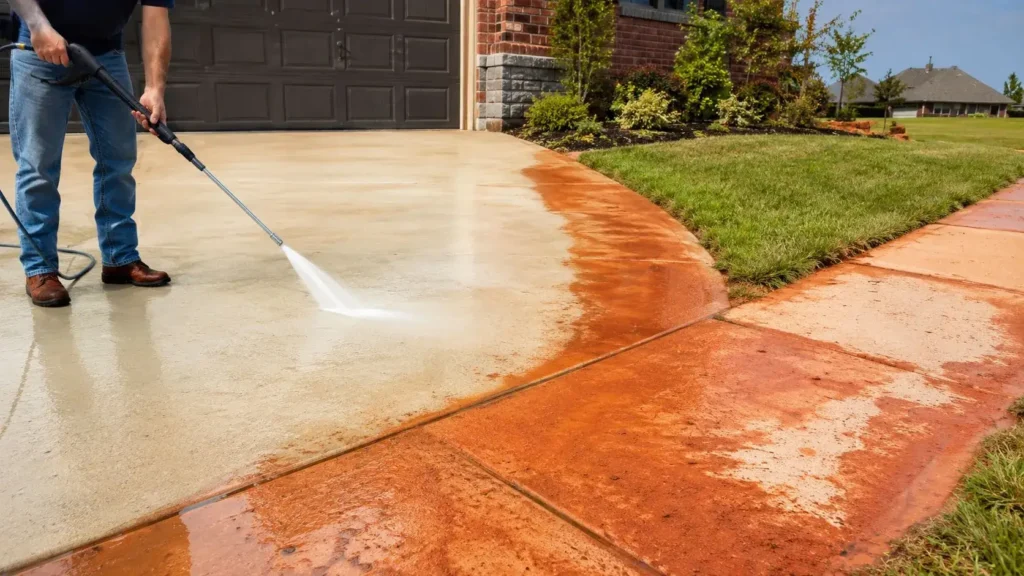




Commercial properties rarely go from clean to obviously dirty overnight.
The sidewalk gradually darkens. Red dirt collects near parking areas. Exterior glass loses its clarity. Entrances start looking less polished.
Because the change happens slowly, cleaning often gets pushed back until an inspection, tenant visit, corporate walkthrough, or customer complaint makes it urgent.
That raises an important question: Should you schedule commercial pressure washing when problems appear, or make exterior cleaning part of your regular property maintenance plan?
Both can work. For many Oklahoma properties, the best solution is somewhere in between.
What Is One-Time Commercial Pressure Washing?
One-time commercial pressure washing addresses a specific cleaning need without creating an ongoing schedule.
It makes sense when you are preparing for an inspection, tenant turnover, property photography, sale, event, or seasonal cleanup. It can also work well when one particular area, such as a sidewalk, parking area, or building exterior, needs attention.
For lower-traffic properties that accumulate buildup slowly, occasional professional cleaning may be enough.
The advantage is flexibility. The downside is that cleaning can become reactive. By the time the property looks dirty enough to schedule service, tenants and customers may already have been seeing the buildup for some time.
What Is Recurring Commercial Exterior Cleaning?
Recurring cleaning focuses on maintaining appearance before buildup becomes severe.
Instead of waiting until the entire property looks overdue, managers identify areas that become dirty fastest and plan maintenance accordingly.
This can be especially useful for Oklahoma properties dealing with red soil, traffic, wind, moisture, algae, mildew, landscaping runoff, and seasonal buildup.
Recurring maintenance can also make planning easier. Instead of discovering a problem right before an inspection or important visit, high-priority areas are already part of the property’s maintenance strategy.
One-Time vs. Recurring vs. Hybrid Cleaning
| One-Time Cleaning | Recurring Cleaning | Hybrid Cleaning |
| Specific cleanup | Ongoing maintenance | Mix of both |
| Good for events, inspections, or turnovers | Good for high-traffic areas | Good for properties with mixed priorities |
| Reactive | Preventive | Prioritized |
| No regular schedule | Planned schedule | Some areas scheduled, others as needed |
| Best when buildup develops slowly | Best when buildup returns quickly | Best when surfaces behave differently |
Neither approach is automatically better. The right choice depends on how the property is used and how quickly different areas lose their clean appearance.
When One-Time Cleaning Makes Sense
One-time cleaning may be enough when your property generally stays presentable and only needs occasional attention.
This could include a seasonal cleanup, preparation for a corporate visit, tenant turnover, inspection, property photography, or a specific problem such as a dirty parking area or red-stained sidewalk.
It can also make sense for smaller offices and lower-traffic properties where exterior buildup develops slowly.
If the property stays clean for long periods, there may be little reason to put every surface on a recurring schedule.
When Recurring Cleaning Makes Sense
Recurring cleaning becomes more useful when appearance is closely tied to the tenant or customer experience.
Storefront entrances, apartment walkways, office entrances, customer parking areas, sidewalks, and other high-traffic surfaces tend to show buildup faster.
Oklahoma red dirt can also make recurring maintenance more practical. If the same sidewalk or parking edge repeatedly develops orange-red staining, waiting for it to become heavily discolored each time creates a cycle of reactive cleaning.
Recurring service can help property managers maintain a more consistent standard while making exterior maintenance easier to anticipate and budget.
Why a Hybrid Plan Often Works Best
Most commercial properties do not need every exterior surface cleaned at the same frequency.
A hybrid plan focuses regular attention on areas that matter most while handling secondary areas when conditions require it.
For example, entrances, storefront glass, front sidewalks, and high-traffic concrete might receive recurring attention. Full building washing, larger parking areas, and lower-visibility sections could be scheduled seasonally or as needed.
This allows managers to maintain the property’s most visible areas without treating every square foot the same way.
Build the Schedule Around Visibility and Buildup
| Gets Dirty Quickly | Gets Dirty Slowly | |
| High Visibility | Clean more frequently | Inspect regularly |
| Low Visibility | Schedule around operational need | Clean as needed |
Start with the areas tenants, customers, and visitors see most. Then adjust based on how quickly dirt, staining, red soil, or organic buildup returns.
How Often Should Your Commercial Property Be Cleaned?
There is no useful one-size-fits-all schedule.
A busy storefront beside exposed soil may need attention more frequently than a low-traffic professional office.
Consider traffic, visibility, landscaping, drainage, property type, and surface material. Entrances and sidewalks may need more attention because of foot traffic, while red dirt trouble spots may require cleaning based on how quickly staining returns.
The best schedule follows the property itself rather than automatically choosing monthly, quarterly, or annual cleaning.
Match the Method to the Surface
Cleaning frequency is only part of the decision. The method matters too.
Pressure washing may be appropriate for durable concrete and other hard surfaces. Siding, painted areas, roofs, stucco, fencing, and other sensitive materials may need lower-pressure soft washing.
Persistent Oklahoma red dirt may also require surface-specific treatment rather than simply increasing pressure.
A recurring plan should not mean repeatedly applying the same cleaning method everywhere. Each surface should receive the method appropriate for its material and condition.
Which Approach Fits Your Property?
Choose one-time cleaning when you have a specific deadline or isolated problem, or when exterior buildup develops slowly.
Consider recurring cleaning when customer-facing and high-traffic areas become dirty quickly, appearance needs to remain consistent, or the same staining repeatedly returns.
Consider a hybrid plan when high-priority areas need regular maintenance but lower-visibility surfaces can be cleaned as needed.
For many commercial properties, that third option provides the most flexibility.
Stop Waiting Until the Property Looks Dirty
The biggest difference between one-time and recurring commercial pressure washing is not the equipment.
It is the maintenance strategy.
One-time cleaning solves a current problem. Recurring cleaning aims to keep the current problem from repeatedly reaching the same point.
Exterior Cleaning Professionals serves commercial properties throughout the Oklahoma City metro and surrounding areas with building washing, storefront washing, parking lot cleaning, commercial window washing, apartment complex pressure washing, graffiti removal, red dirt removal, and other exterior cleaning services.
Whether your property needs a one-time cleanup, ongoing maintenance, or a combination of both, the right plan should reflect its traffic, visibility, surfaces, and rate of buildup.
Call or text Exterior Cleaning Professionals at 405-822-0750 or request a free quote to discuss the right commercial exterior cleaning plan for your property.